
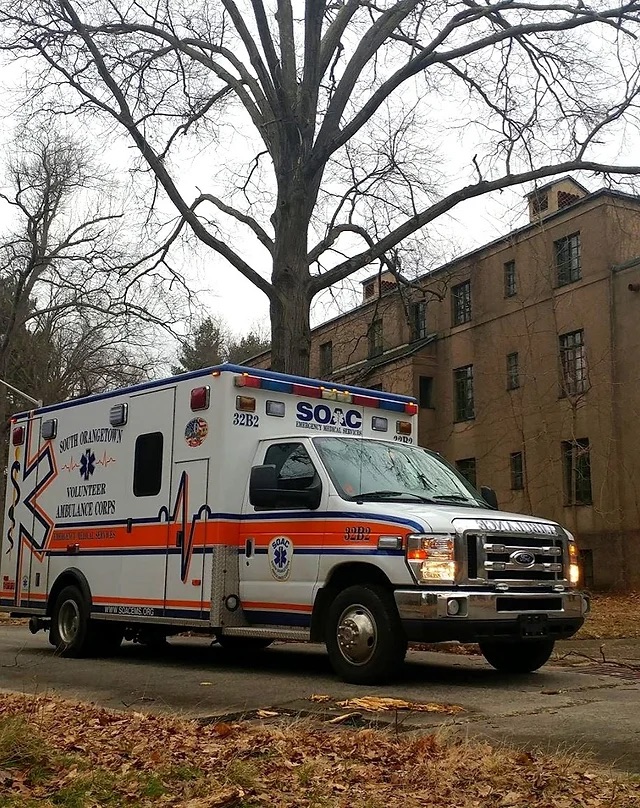
Prior to meeting my husband, I had a deep appreciation for Emergency Medical Services (EMS), but was unaware of the intricate details and tireless efforts that go into providing this critical service. Through my husband’s involvement, I have gained a profound understanding of the dedication and commitment required to serve in this field. As he is humble and prefers not to be in the spotlight, I believe it is an opportune time to acknowledge his selflessness and the invaluable contributions he and his fellow ambulance corps members make to our community. I would like to take this moment to express my sincere gratitude and highlight the vital importance of EMS.
Anyway, let’s get on with the blog!
During the early 1970s, America was in the midst of profound cultural transformations. President Richard Nixon had recently taken office, and the Vietnam War continued to rage on. Amidst this tumultuous landscape, the thriller “Jaws” gripped audiences in theaters, while disco music burst onto the mainstream scene. However, a pivotal moment had already occurred in 1966, when President Lyndon B. Johnson received a groundbreaking report titled “Accidental Death and Disability: The Neglected Disease of Modern Society.” This report shed light on the startling fact that accidental injuries were the leading cause of death for individuals in the first half of their lifespan, setting the stage for a new era of focus on prevention and safety initiatives.
The report revealed a startling truth: in 1965, motor vehicle accidents claimed more American lives than the entire Korean War. When examining prehospital emergency care, the report starkly noted that “a person was more likely to survive a serious injury in a combat zone than on an average city street.” Moreover, the report exposed a glaring lack of regulations and standards governing ambulance operations and provider training, highlighting a critical need for improvement in emergency medical response.
Known as “the White Paper,” this report made several key recommendations for preventing and managing accidental injuries, including the standardization of emergency training for rescue squad personnel, police officers, firefighters, and ambulance attendants. This led to the creation of the first nationally recognized EMS curriculum—emergency medical technician-ambulance (EMT-A)—published in 1969. Many consider this document the birth of modern EMS.
For many years, South Orangetown lacked an ambulance corps, relying instead on services from the Nyack Community Ambulance Corps, which served the community since 1939.
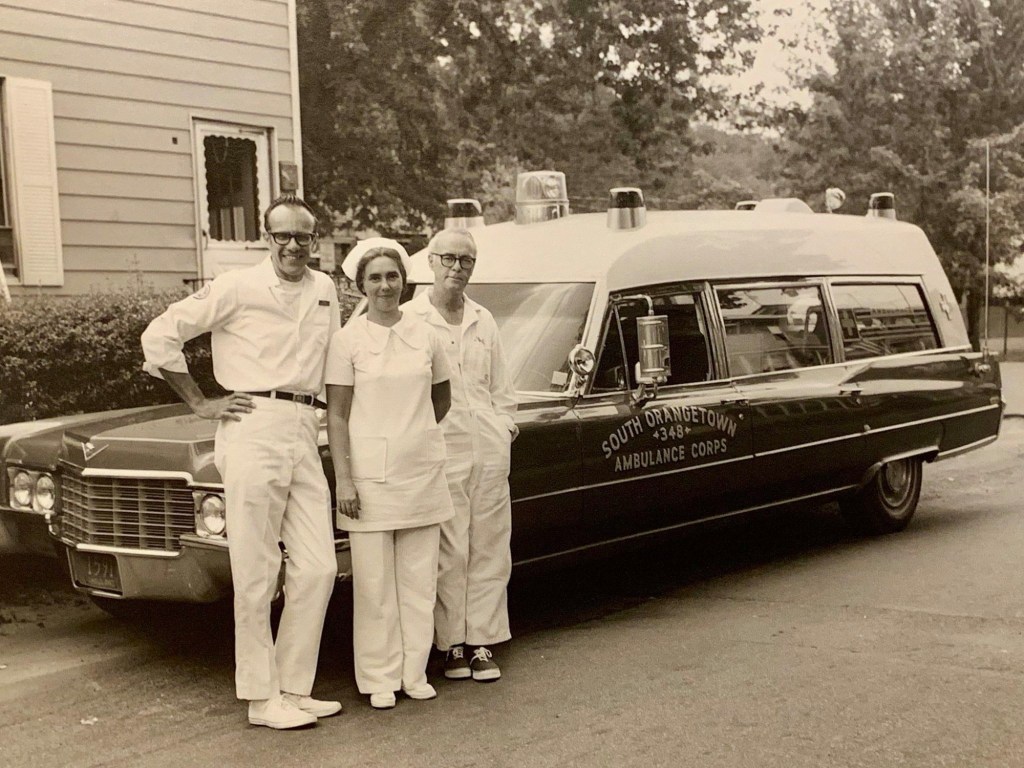
During a series of community gatherings, residents expressed their concerns and acknowledged the necessity of establishing a volunteer ambulance service based in South Orangetown, thereby reducing reliance on neighboring towns’ ambulance services. Following three consecutive monthly meetings, the Corps was officially established in July 1957 and subsequently granted a non-profit membership corporation charter by the State of New York on September 20, 1957.
The South Orangetown Ambulance Corps (SOAC) maintains a constant state of readiness, providing emergency medical response services to the community 24 hours a day, 7 days a week, and 365 days a year. Annually, SOAC responds to approximately 2700 emergency medical calls, ensuring timely and critical care to those in need.
Founding Members
-John Britton, President;
-Elanor Jahoda, Vice President;
-Gertrude Keller, Secretary;
-Joe Cassetta, Treasurer;
-Otto Rohland, Rudy Keller, Frank Kopac, Leonard Behr, and Richard Spillman, Directors;
-William Krausser, Captain;
-Charles Martin, First Lieutenant,
-and Robert Beasley, Second Lieutenant.
Do you want to help make a difference in our community?
Click here for information!

 OTown History
Leave a comment